Quick Answer: How Does AI Improve JIT Inventory Management?
AI helps manufacturers support JIT inventory management by improving demand forecasts, identifying inventory risk earlier, and aligning replenishment decisions with current production needs. However, AI alone does not create feasible execution plans.
When AI signals connect to APS, manufacturers can balance materials, capacity, and schedule changes more effectively. As a result, teams can reduce shortages, excess inventory, and expediting.
AI for Just-In-Time (JIT) Inventory Management
AI can improve JIT inventory management by helping manufacturers forecast demand better, identify inventory risk earlier, and time replenishment more accurately. However, AI does not replace execution planning.
To make JIT work in a real plant, inventory signals still need to connect to material availability, supplier timing, and feasible production schedules.
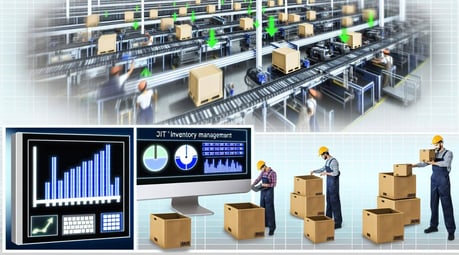
JIT Inventory Management
JIT inventory management aims to keep material levels low while making sure parts arrive when production needs them. In manufacturing, that means less excess inventory, lower carrying costs, and fewer delays caused by poor material timing.
JIT works best when demand, supply, and production stay aligned. However, when any of those shift, the plant can face shortages, expediting, or unstable schedules.
Cost Reduction
Reduced inventory levels can lower carrying costs. For example, manufacturers may spend less on storage, insurance, and depreciation.
Increased Efficiency
JIT can reduce delays caused by waiting for materials. As a result, production flow becomes smoother and easier to control.
Improved Quality
With fewer items in inventory, teams can spot defects faster. In turn, they can address quality issues before they spread.
Enhanced Customer Satisfaction
Delivering products on time and with consistent quality builds trust. Because of that, customer satisfaction can improve.
Capital Preservation
Lower inventory levels free up working capital. That capital can then support other priorities, such as process improvement or expansion.
Environmental Benefits
Reduced waste and lower material use can support a more sustainable operation. As a result, JIT can also improve environmental performance.
JIT offers clear benefits, but it is hard to sustain without better demand signals, material visibility, and production planning. That is where AI can help.
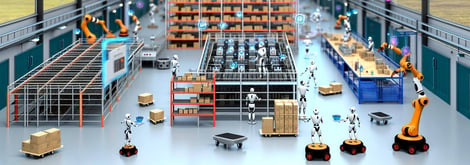
The Role of AI in JIT Inventory Management
AI can support JIT inventory management by improving forecast quality, flagging inventory risk earlier, and helping planners react faster to changes in supply or demand. That gives manufacturers better inputs for inventory and production decisions.
That matters because JIT breaks down when materials arrive too early, too late, or in the wrong quantity. Better signals help planners make better decisions before those issues hit the schedule.
Demand Forecasting
AI can improve demand forecasting by analyzing order history, seasonality, and changing demand patterns. As a result, manufacturers can reduce forecast error and make better inventory decisions.
Production Planning
AI can support production planning by helping teams respond faster to changes in machine capacity, labor availability, and material timing. That can reduce delays and improve schedule stability.
Inventory Optimization
AI can help teams monitor inventory levels more closely. In turn, that can improve replenishment timing and reduce avoidable carrying costs.
Real-time Insights
AI can help teams see changes in the supply chain faster. Because of that, operations leaders can respond sooner to disruption, shortages, or delay risk.
Quality Control
AI can also support quality monitoring. As a result, teams may catch defects earlier and reduce the risk of bad output reaching customers.
Supplier Collaboration
AI can improve supplier coordination by highlighting timing risk and supply issues earlier. That gives manufacturers more time to adjust.
The Integration Challenge
The main challenge is not whether AI sounds useful. Instead, the real challenge is connecting AI outputs to the systems that already run the plant.
For manufacturers, ERP, SCM, MES, and scheduling data all need to stay aligned. If demand signals, material status, and production plans do not match, AI recommendations can still drive the wrong decision.
Compatibility
Manufacturers first need to confirm that the AI solution fits the current system landscape. In some cases, that may require custom integration work or middleware.
Data Integration
Seamless data flow is critical. For example, inventory, sales, supplier, and production data all need to move cleanly across systems.
Data Security
Sensitive manufacturing data needs strong protection. Because of that, security controls, access rules, and audits still matter.
Scalability
The integration approach should support future growth. As demand changes, the system should still be able to keep up.
User Training
Teams need training to use the integrated system well. Otherwise, even a strong technical setup may underperform.
Change Management
AI integration can change both process and decision flow. That is why manufacturers need clear expectations and strong communication during rollout.

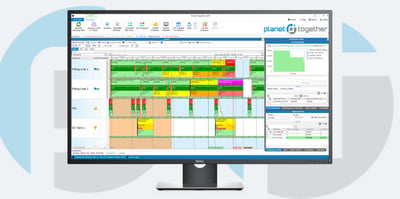
Integration Solutions with PlanetTogether
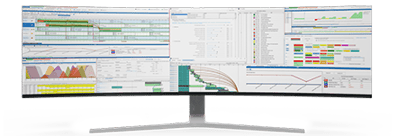
PlanetTogether APS helps manufacturers turn better planning inputs into better execution decisions. When AI improves demand, inventory, or supply signals, APS helps planners build schedules that reflect real labor, material, machine, and changeover constraints.
That matters because JIT does not succeed on signal quality alone. Instead, it succeeds when planners can turn those signals into feasible production plans.
PlanetTogether APS can fit into manufacturing environments that already rely on ERP, SCM, and MES platforms. The key goal is the same across systems: keep planning, inventory, and execution aligned so JIT decisions reflect real operating conditions.
Benefits of Integration
When AI, APS, and core operational systems work together, manufacturers gain better visibility and faster decisions. As a result, teams can improve material timing, reduce avoidable inventory, and support more stable schedules.
It can also help planners react faster when demand changes, supplier timing slips, or capacity constraints shift.
Enhanced Visibility
Real-time data sharing improves visibility across planning and execution. Because of that, teams can make better decisions with less guesswork.
Improved Planning Accuracy
Better inputs improve planning accuracy. In turn, that reduces the risk of overstocking, understocking, and unstable schedules.
Streamlined Processes
Connected systems reduce manual handoffs and planning delays. As a result, processes become faster and easier to manage.
Cost Reduction
Better timing and lower inventory can reduce cost. For example, manufacturers may lower carrying cost and use resources more efficiently.
Increased Agility
Teams can react faster when demand or supply conditions change. That makes the operation more agile and easier to adjust.
Competitive Advantage
Better inventory timing, delivery performance, and planning speed can help manufacturers compete more effectively, especially when supply conditions are volatile.
Decision Framework: When Do You Need AI, APS, or Both?
Use basic JIT planning alone when:
- demand is stable
- supplier reliability is high
- schedules change infrequently
- material shortages rarely force rescheduling
Add AI when:
- forecast error creates inventory swings
- supplier timing is inconsistent
- planners need earlier risk signals
Add APS when:
- inventory decisions must match real capacity
- labor, materials, or bottlenecks affect schedule feasibility
- the plant needs to replan quickly without relying on spreadsheets
Move Beyond ERP-Only Planning for JIT Inventory
AI can improve JIT inventory management. However, better forecasts alone do not fix scheduling gaps.
Your team still needs clear capacity signals, faster replanning, and stronger coordination across inventory, production, and supply chain systems. That is why the next step is to see where ERP stops and APS starts.
In WHY ERP ALONE IS Not the Answer, you will learn how manufacturers connect planning, scheduling, and execution so they can support JIT goals with less risk and more control.
What You’ll Learn
- See why ERP alone struggles with real capacity, sequencing, and schedule optimization.
- Learn how APS supports JIT inventory with better production planning and faster response.
- Understand how stronger visibility helps teams reduce excess inventory and avoid shortages.
- Explore ways to improve delivery accuracy, throughput, and resource use at the same time.
- Get a clearer view of how APS fits with ERP, SCM, and MES in daily operations.

FAQs: AI for JIT Inventory Management
What is AI for JIT inventory management?
AI for JIT inventory management uses data-driven models to improve demand forecasting, inventory decisions, and replenishment timing so materials arrive closer to when production needs them.
How does AI improve JIT inventory management in manufacturing?
AI helps manufacturers forecast demand more accurately, spot inventory and supply risk earlier, and respond faster when material timing changes. As a result, teams can reduce shortages, excess inventory, and expediting.
Can AI replace ERP, SCM, or MES in JIT inventory management?
No. AI does not replace ERP, SCM, or MES. Instead, it works best when it uses data from those systems and supports better planning and execution decisions.
Why does APS matter in AI-driven JIT inventory management?
APS helps turn AI signals into feasible schedules that reflect real capacity, labor, materials, bottlenecks, and changeovers. That matters because better forecasts alone do not create executable production plans.
What is the biggest risk in AI-driven JIT inventory management?
The biggest risk is acting on forecasts or inventory signals without connecting them to real production constraints, supplier timing, and schedule feasibility.
When should a manufacturer use AI, APS, or both?
Use AI when forecast error, supplier timing, or inventory swings create planning risk. Use APS when inventory decisions also need to match real plant capacity and fast schedule changes. Use both when the plant needs better signals and better execution at the same time.
See PlanetTogether APS in Action
Ready to connect AI-driven inventory decisions to feasible production schedules? Request a demo to see how PlanetTogether APS helps align materials, capacity, and execution.